How Is Implant Cleaning Performed?
Dental implants are one of the most successful modern dentistry solutions for replacing missing teeth, offering the closest appearance and function to natural teeth. These structures, made of titanium, do not decay; however, this does not mean that they do not require care. Just like natural teeth, plaque and tartar can accumulate around implants. Over time, this buildup may lead to inflammation of the gum tissue around the implant, known as peri-implantitis, and may even result in implant loss.
So, how should implant cleaning be performed to keep the new teeth you invested significant time and money in healthy for a lifetime? Here are the steps you can follow at home and the essential tips you should pay attention to.
Free Information Form
Get Detailed Information!
Why Is Implant Cleaning So Important?
Natural teeth are attached to the jawbone through flexible connective tissue fibers, and these fibers form a natural barrier against bacteria. Implants, however, fuse directly with the bone through a process called osseointegration. Due to this structural difference, the gum tissue surrounding the implant is much more vulnerable to bacterial attacks.
If regular oral hygiene is not maintained, food debris and bacteria can quickly penetrate beneath the gum line and cause the jawbone supporting the implant to deteriorate. The leading cause of implant loss is not mechanical failure, but gum diseases that develop due to poor oral hygiene and progress silently.
Step-by-Step Implant Cleaning at Home
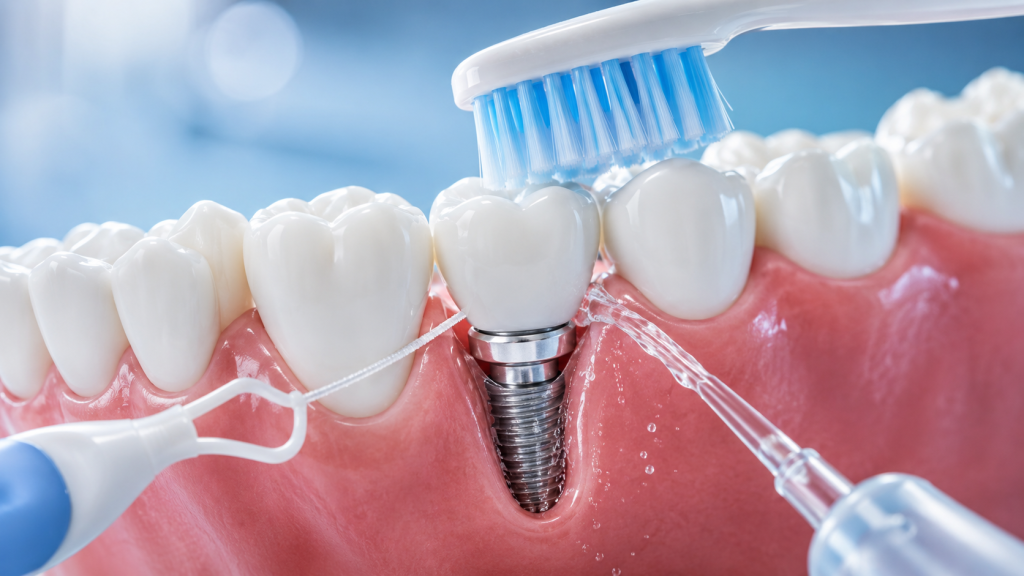
Implant care requires a slightly more technical and attentive approach than a standard toothbrushing routine. Here are the 3 essential steps you should follow for a healthy care routine:
1. Choosing and Using the Right Toothbrush
When brushing your prosthetic teeth, you should choose toothbrushes with soft or extra-soft bristles. Hard-bristled brushes may cause gum recession around sensitive implant areas and create micro-scratches on porcelain surfaces.
- You should brush your teeth at least twice a day for two minutes, using circular motions and sweeping from the gum line toward the tooth surface — from pink to white.
- In addition to manual toothbrushes, rechargeable electric toothbrushes with rotating and vibrating movements are highly effective in removing plaque around implants.
2. Special Dental Floss and Interdental Brushes
Brushing alone is never enough to clean food debris trapped between implants and beneath dental bridges. For cleaning the gum pocket surrounding the crowns, the best results are achieved with special dental floss with a thick and spongy structure, such as Super Floss.
- Interdental brushes are essential for cleaning beneath implant bridges and the contact points between implants and neighboring teeth.
- When choosing an interdental brush, you should prefer models with a plastic-coated wire to avoid scratching the titanium surface.
3. The Effect of an Oral Irrigator Water Flosser
Especially for patients with multiple implants or fixed full-arch prostheses such as All-on-Four, using an oral irrigator, also known as a water flosser, is extremely valuable.
- These technological devices work by spraying pressurized water and can reach the narrowest areas that toothbrushes and dental floss cannot access, helping to remove bacterial plaque effectively.
- Using the oral irrigator on a low or medium pressure setting allows you to safely clean the gum pockets without irritating the gums.
What You Should Never Do in Implant Care
To avoid causing harm while trying to clean your implants, you should stay away from the following mistakes:
- Abrasive Toothpastes: Avoid using whitening toothpastes that contain high amounts of baking soda or granules. These toothpastes may scratch the glossy polished surface of zirconium or porcelain crowns.
- Using Toothpicks: Do not use toothpicks or sharp metal tools to clean around implants. These objects can damage the gums and cause bleeding, allowing infection to penetrate the tissue.
- Frequent Use of Alcohol-Based Mouthwash: Use mouthwashes only for the period recommended by your dentist. Continuous and excessive use of alcohol-based mouthwash may disrupt the natural oral flora and cause dry mouth.
Do Not Neglect Professional Clinical Cleaning
No matter how perfectly you care for your implants at home, microscopic tartar buildup may still occur on implant surfaces over time, depending on the structure of your saliva.
To keep this under control, it is essential to visit your specialist dentist every 6 months for professional maintenance. Your dentist deeply cleans the implant area using special instruments that do not scratch the crown surface, such as titanium, Teflon, or carbon-tipped curettes. At the same time, a panoramic X-ray can be taken to check the bone level, allowing any possible bone loss to be stopped at the earliest stage.
Extending the Lifespan of Your Implants Is in Your Hands
In these innovative treatments, which do not carry a risk of decay but are highly dependent on gum health, the shortest answer to the question “How is implant cleaning performed?” lies in proper brushing, consistent interdental cleaning, and regular dental check-ups.
Just a few minutes of daily care for your new teeth is the greatest guarantee that they will remain strong, functional, and aesthetic in your mouth for many years.