How Long Does Bone Graft Healing Take?
Dental implants, one of the most reliable and long-lasting methods for treating missing teeth, require sufficient jawbone volume for a successful outcome. In cases where the jawbone has resorbed or is insufficient, bone grafting, also known as bone powder treatment, becomes necessary. So, what kind of process awaits patients after this procedure, which is one of the cornerstones of implant treatment? How long does bone graft healing take?
In this article, we will examine in detail what bone grafting is, the healing stages that should be expected after the procedure, and the ways to support this process in a healthy manner.
Free Information Form
Get Detailed Information!
Healing Stages After Bone Grafting
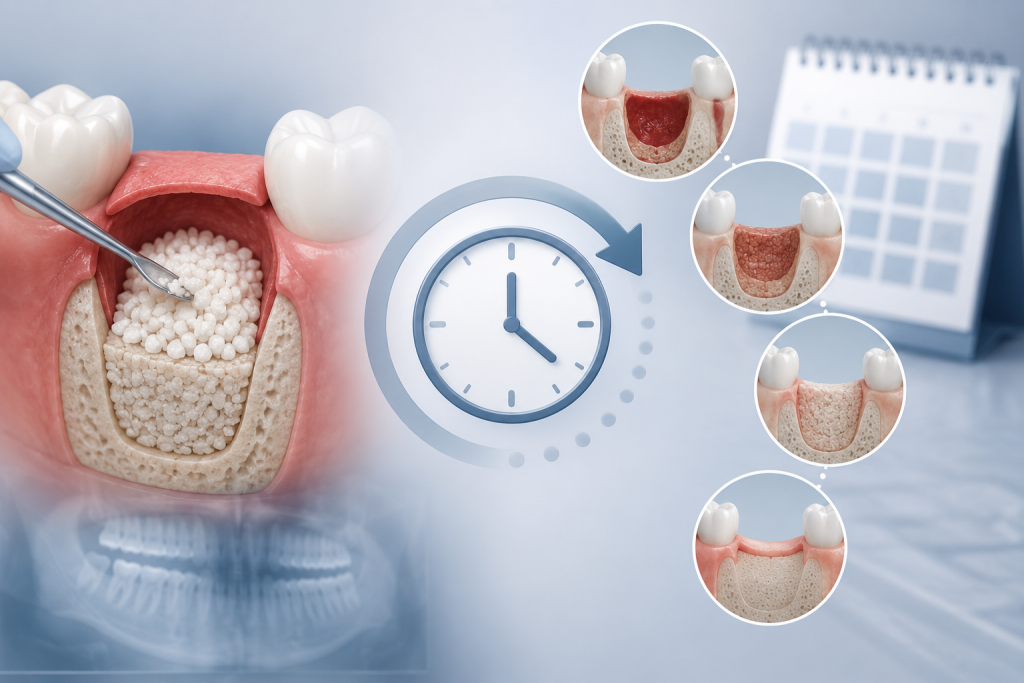
Although the healing time after bone grafting may vary from person to person and depending on the size of the graft applied, the process is generally divided into two main stages: soft tissue healing and bone integration, also known as fusion.
1. Early Stage Soft Tissue Healing
During the first few days immediately after the operation, mild swelling, tenderness, and redness in the treated area are considered a normal reaction. Thanks to the painkillers and antibiotics prescribed by your dentist, this period is usually managed quite comfortably.
- Within the first 7 to 14 days, the sutures in the gums are removed or, depending on the type of suture used, dissolve on their own, and the gum surface heals completely.
- During this period, patients can comfortably return to their normal daily lives. However, the actual healing continues beneath the gum tissue, at the bone level.
2. Bone Fusion Osseointegration
Even though the soft tissue heals, it takes time for the added bone graft material to integrate with the patient’s own jawbone, develop blood supply, and become strong enough to support an implant.
- In a standard bone graft procedure, the formation of new bone and the area becoming fully ready for implant surgery usually takes 3 to 6 months.
- If a more extensive procedure, such as sinus lifting, also known as sinus floor elevation, has been performed, or if there is advanced bone loss, this waiting period may extend up to 6 to 9 months.
Thanks to advances in dental technology, in some specific cases where the patient’s existing bone structure is suitable, bone grafting and dental implant placement can be performed in the same session. In this case, the patient does not need to wait for an additional bone formation period.
4 Key Factors That Affect Bone Graft Healing Time
The healing timeline does not progress in the same way for every patient. The main factors that determine the speed of the process are as follows:
- Size of the Graft and Application Area: The cellular healing time of a small graft applied only to a single missing tooth area naturally differs from that of large-scale grafts involving the entire jaw or sinus region.
- Patient’s General Health Condition: Chronic conditions such as uncontrolled diabetes, autoimmune diseases, or osteoporosis may slow down the healing and bone formation process.
- Oral Hygiene Habits: Keeping the surgical area free from plaque and bacteria eliminates the risk of infection and helps the graft attach properly while supporting bone formation.
- Smoking: Smoking significantly restricts blood and oxygen flow to the tissues. In patients who smoke, the risk of bone graft failure is much higher, and the healing period is noticeably prolonged.
What Should Be Done to Speed Up the Healing Process?
After bone graft treatment, it is very important to follow these steps to support your body’s new bone formation and minimize the risk of complications:
- Follow Your Dentist’s Recommendations: Take the prescribed antibiotics exactly on time and do not neglect the recommended antimicrobial mouthwashes.
- Apply Cold Compresses During the First Days: Applying an ice compress externally to the cheek at intervals during the first 48 hours after the operation helps minimize possible edema and swelling.
- Pay Attention to Your Diet: During the early healing period, you should strictly avoid extremely hot, hard, crusty, spicy, or acidic foods. Consume soft, lukewarm foods such as soup, yogurt, and purée, as well as protein-rich foods that support tissue repair.
- Avoid Smoking and Alcohol: For healthy bone integration, you should completely stop smoking and alcohol consumption, at least during the first critical weeks of healing.
- Protect the Treated Area: Be very gentle around the sutured and treated area while brushing your teeth. Avoid harsh brushing movements and touching the area.
How Can You Tell If a Bone Graft Has Failed?
As with any surgical procedure, bone graft treatment carries a low risk of failure. In cases where the body rejects the added material or the area becomes infected, early intervention is critically important. The most common signs indicating that a bone graft operation may not have been successful are as follows:
- Persistent and Worsening Pain: Experiencing pain during the first few days after the operation is normal. However, pain that lasts longer than 1 week, does not respond to painkillers, and gradually becomes more severe may indicate that something is wrong.
- Inflammation and Bad Odor: Yellowish or white discharge from the treated area, a persistent bad taste in the mouth, and unpleasant odor are among the clearest signs of an active infection.
- Displacement of the Graft Material: Continuously feeling small particles like grains of sand in the treated area inside the mouth, or seeing excessive leakage through the sutures, may indicate that the graft has lost its integrity.
- Prolonged Excessive Swelling and Redness: Facial swelling should begin to decrease after the first 3 days. If the swelling continues to increase and is accompanied by excessive warmth and throbbing in the area, you should contact your dentist without delay.
A Strong Foundation for Long-Lasting Implants
Bone grafting is a highly successful preliminary treatment that helps dental implants remain in the mouth safely and comfortably for many years. Although bone graft healing time generally varies between 3 and 6 months, this period represents one of the most important foundations for strong new teeth that you can use for many years.
The clearest information about your treatment planning and personalized healing timeline will be provided by your specialist dentist after evaluating your panoramic X-ray and three-dimensional tomography.