Why Is a Retainer Used After Orthodontic Treatment?
You have reached the end of a long orthodontic treatment process that requires patience, whether with braces or clear aligners. When you look in the mirror, you see perfectly straight teeth. However, the treatment is not fully complete yet. The most critical step in preserving this beautiful smile is the use of a retainer, also known as a retention appliance. So, why is a retainer used after orthodontic treatment following months or even years of effort? Let’s examine the answer to this question and all the details of the retention phase together.
Free Information Form
Get Detailed Information!
What Is Retention Treatment?
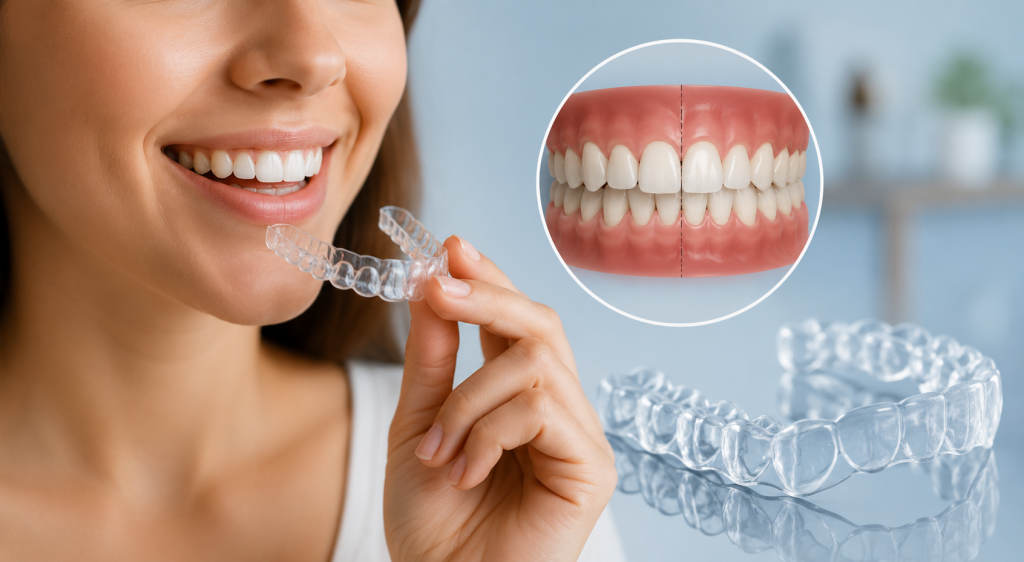
In orthodontic treatment, the teeth are slowly moved through the bone into their ideal positions. When braces or aligners are removed, the guiding pressure on the teeth disappears, and the teeth become free. The retention phase is the period during which the teeth adapt to their new positions and the bone tissue hardens around this new position to stabilize the teeth. The protective appliances used during this process are called retainers.
Main Reasons for Using a Retainer
The use of retainers is essential for making the success of orthodontic treatment long-lasting. Here are the main reasons:
- Preventing Teeth from Returning to Their Original Positions Relapse: The elastic gum ligaments surrounding the teeth have a kind of “memory.” As soon as treatment ends, the teeth tend to move back to their previous crooked positions due to these tense ligaments. Retainers prevent this backward movement, known as relapse, until the ligaments adapt to the new position.
- Supporting the Adaptation of Bone and Tissues: When teeth are moved to their new positions, it takes time for the bone tissue around the tooth roots to fully mature and firmly surround the teeth. Retainers support the teeth and keep them stable until the bone tissue has completely healed.
- Reducing the Effects of Natural Aging: Throughout life, the jaw structure continues to develop, and the teeth may continue to move slightly forward, a process known as mesialization. Regular retainer use helps prevent age-related tooth shifting and crowding.
What Are the Types of Retainers?
Your orthodontist will choose the most suitable retainer for you according to your tooth structure and treatment history:
- Removable Clear Retainers Essix: This is one of the most commonly preferred methods today. Thanks to their transparent structure, these aesthetic retainers are not noticeable from the outside and can be inserted and removed by the patient while eating or brushing.
- Fixed Retainers Lingual Retainers: These are very thin, invisible wires bonded to the back surfaces of the teeth, facing the tongue, using special filling materials. Since the risk of crowding returning is especially high in the lower front teeth, these wires are designed to remain in the mouth for many years.
- Hawley Appliance: These are highly durable, classic removable retainers consisting of an acrylic palate and a metal wire that surrounds the front teeth.
How Long Should a Retainer Be Used?
Although this period varies from patient to patient, the general recommendation of orthodontists is to wear the retainer day and night during the first 6 months, removing it only while eating and brushing. After the sixth month, as the bone tissue heals, it is usually considered sufficient to wear it only at night while sleeping.
Retention treatment is a lifelong investment. The longer and more regularly you use your retainers, even if only a few nights a week, the longer your smile will remain flawless.
How Should Retainers Be Cared For?
To extend the lifespan of your retainers and maintain your oral hygiene, you should pay attention to the following rules:
- Store Them in Their Case: When you remove your retainers, always keep them in their special protective case. Wrapping them in a napkin is one of the most common mistakes that can lead to them being accidentally thrown away or broken.
- Clean Them Properly: Clean your retainers every day with liquid soap, as toothpaste may scratch them, and a soft brush using cold or lukewarm water. Hot water can melt the plastic material and distort the shape of the retainers. You may also use special retainer cleaning tablets once a week.
- Protect Them from Heat: Avoid consuming very hot drinks such as tea or coffee while the retainers are in your mouth.
What Should You Do If Your Retainer Is Lost or Damaged?
One of the most common problems encountered during the retention phase is the loss of removable retainers or cracking and breaking due to use. In such a situation, it is very important to contact your orthodontist without delay.
Especially during the first months after active treatment has just been completed, the tendency of the teeth to return to their former positions, known as relapse, is at its highest level. Even not wearing the retainer for a few days may cause visible tooth movement and lead to deterioration of the current tooth alignment.
Trying to repair a damaged retainer at home with materials such as glue or continuing to use a broken or cracked retainer may harm the tissues inside the mouth.
Therefore, if your retainer is lost or its physical integrity is damaged, you should not wait for your next routine check-up. You should contact your clinic without delay so that new impressions can be taken and the retainer can be replaced as soon as possible.
Do Not Leave the Treatment Unfinished
Orthodontic treatment is a medical process that requires significant time, effort, and patience from both the patient and the dentist. Preserving the ideal tooth alignment and bite achieved at the end of the active treatment phase depends directly on patient compliance during the retention period.
Considering the elastic structure of the gum ligaments, the healing process of bone tissue, and natural age-related physiological changes, retainer use is not an optional preference but a mandatory and inseparable part of treatment.
In short, the removal of braces or aligners does not mean that the process is completely over. Following the usage periods and retention protocols determined by your orthodontist is the most reliable way to protect your investment in treatment and preserve your healthy smile for many years.