Can Bite Disorders Cause Jaw Joint Pain?
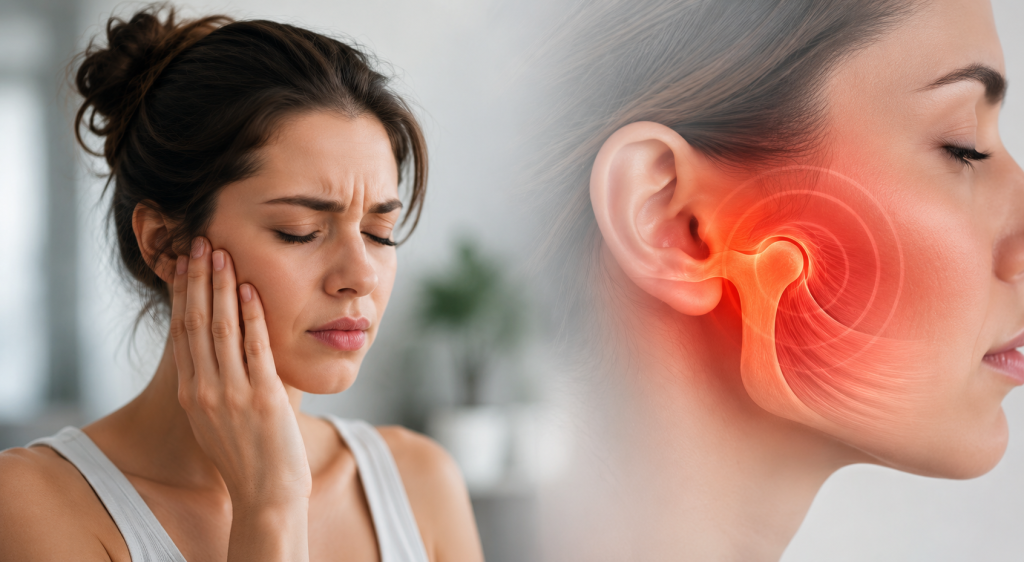
We constantly use our jaw in daily life while speaking, eating, or yawning. However, in some cases, even these simple movements can turn into severe pain. Although such pain is often associated with stress or fatigue, the underlying cause may actually be related to the alignment of your teeth. So, what is the relationship between bite disorders and jaw joint problems?
Free Information Form
Get Detailed Information!
What Is a Bite Disorder Malocclusion?
A bite disorder, known in dental terminology as malocclusion, refers to a condition in which the upper and lower jaw teeth do not come into proper and harmonious anatomical contact when the mouth is closed.
In an ideal and healthy bite, the upper teeth should slightly overlap the lower teeth, and chewing force should be distributed evenly across all teeth. However, anatomical factors such as crooked teeth, jaw retrusion or protrusion, and missing teeth can disrupt this perfect balance and create the foundation for bite disorders.
What Are the Main Causes of Bite Disorders?
Bite disorders that disrupt the balance of pressure placed on the jaw joint usually do not develop due to a single cause. Both genetic factors and environmental influences play an important role in the development of this condition. The main causes that disrupt bite balance are as follows:
- Genetic Predisposition: A jawbone that is smaller or larger than normal, skeletal incompatibilities, or tooth sizes that do not fit the dental arch may be inherited genetically.
- Childhood Habits: Habits such as prolonged thumb sucking, bottle or pacifier use, and mouth breathing during infancy and early childhood can negatively affect the development of the palate and jaw.
- Untreated Missing Teeth: When the space left by extracted or lost teeth is not restored with a prosthesis or implant, neighboring teeth may shift toward this gap. This directly disrupts the chewing plane and the bite balance of the teeth.
The Connection Between Jaw Joint Pain and Bite Disorders
Bite disorders are one of the most common and fundamental causes of jaw joint Temporomandibular Joint TMJ pain. When the upper and lower teeth do not close in harmony, the distribution of force during chewing becomes uneven. The jaw muscles and joint have to exert much more effort than normal to compensate for this functional imbalance. Over time, this can lead to serious damage in the joint structure.
Bite disorders affect the joint in the following ways:
- Excessive Muscle Fatigue and Spasms: Overworking of the muscles that try to balance the closing position of the jaw can cause chronic muscle spasms in the face and neck area.
- Deformation of the Joint Disc: Inside the jaw joint, there is a cartilage-like disc that acts as a cushion. The uneven pressure caused by an incorrect bite may cause this disc to shift out of place or wear down, leading to clicking sounds during mouth movements.
- Triggering Bruxism Teeth Clenching: In individuals with bite disorders, the nervous system may try to bring the jaw into its ideal position during sleep. This effort can result in involuntary teeth grinding and jaw clenching episodes, worsening joint pain.
Symptoms of Temporomandibular Joint TMJ Disorders
If the source of your pain is related to bite problems, you may experience one or more of the following symptoms:
- Throbbing and radiating pain around the jaw, face, temples, or ears
- Difficulty or strain in the jaw while eating, yawning, or speaking
- Inability to open the mouth fully, restricted movement, or sudden jaw locking
- Neck stiffness and unexplained headaches upon waking in the morning
How Is the Correct Diagnosis Made in Jaw Joint and Bite Problems?
A comprehensive specialist examination is essential to determine whether the source of jaw joint pain is truly related to tooth alignment and bite disorder. In modern dentistry, various diagnostic methods are used to avoid incorrect treatment approaches.
Advanced Imaging Methods
Damage inside the jaw joint cannot be fully understood simply by looking from the outside. Using panoramic X-rays and 3D Jaw Tomography CBCT, the anatomical structure of the joint, wear on the bone surfaces, and the position of the disc are examined with millimetric precision.
Clinical TMJ and Occlusion Bite Analysis
During the intraoral examination, your dentist carefully checks the contact points between the upper and lower teeth. By using special articulation papers, also known as bite papers, early contact points in the mouth or teeth exposed to excessive pressure can be easily identified. In addition, the sensitivity of the jaw muscles is evaluated manually to assess the extent of muscle spasms.
Treatment Approaches How Should You Manage the Process?
If the underlying cause of jaw joint pain is tooth alignment and jaw incompatibility, simply suppressing the pain is not enough for long-term recovery; the bite problem must be treated directly.
- Orthodontic Treatments: Braces or modern clear aligner treatments such as Invisalign help move the teeth into their ideal positions and correct the bite.
- Use of an Occlusal Splint Night Guard: Custom-made hard protective splints are used to immediately relax the jaw muscles, reduce pressure on the joint, and prevent the destructive effects of teeth clenching.
- Prosthetic Restorations: If the bite disorder is caused by missing teeth or poorly made old crowns, the chewing plane is reconstructed through implant or crown-bridge treatments.
Steps Toward a Healthy Smile and a Pain-Free Life
Jaw joint problems are serious conditions that can directly interfere with a person’s daily quality of life, sleep patterns, and even eating habits. Although painkillers or hot and cold compress applications may provide temporary relief, these pains will continue to recur in a cycle unless the underlying cause, bite disorders, is treated permanently.
If you wake up in the morning with a tired jaw, feel strain in your muscles while chewing, or notice clicking sounds coming from your jaw joint, you should not ignore these warning signs. Consulting a specialist without delay and undergoing a detailed jaw and bite analysis is one of the most important steps in the treatment process.
Remember, a correct and balanced bite is not only the key to an aesthetically flawless smile, but also one of the most essential guarantees of a healthy and pain-free jaw structure that can last a lifetime.