Menu
What is Tooth Polishing, What is it For, and How is it Used?
Tooth polish (polishing paste) is a special oral care preparation used after professional dental cleaning to smooth the enamel surface, add shine, reduce plaque accumulation, and make the tooth surface more hygienic.
It is usually fluoride-containing with a micro-abrasive texture and is applied by dentists following periodontal cleaning and scaling procedures.
This material should not be confused with daily-use products; it is a clinical finishing step in aesthetics and an important complementary measure in maintaining dental health.
Free Information Form
Get Detailed Information!
What is the Purpose of Tooth Polish?
The main goal of tooth polishing is to smooth out microscopic irregularities that appear after cleaning, shine the enamel surface, and help teeth remain clean and smooth for a longer time. This procedure makes plaque accumulation more difficult, providing a brighter aesthetic appearance while supporting oral hygiene. Its functions can be summarized as follows:

- Smooths the enamel surface → Reduces bacterial and plaque retention.
- Provides aesthetic shine → Creates a cleaner, vibrant smile that reflects light properly.
- Prevents stain formation → Coffee, tea, and tobacco stains adhere less.
- Helps reduce sensitivity → Fluoride-containing polishes support dentin tubules.
- Extends oral hygiene → Maintains the effects of cleaning for a longer time.
It is especially recommended after smile design, whitening, orthodontic maintenance, and tartar removal procedures. In short, tooth polishing is not only aesthetic but also provides a final touch of biological cleaning and protection.
How to Apply Tooth Polishing?
Tooth polishing should only be performed by a dentist.
The application steps proceed as follows:
- Tartar removal & surface scaling are performed
- If necessary, surface stains are removed with air-polishing
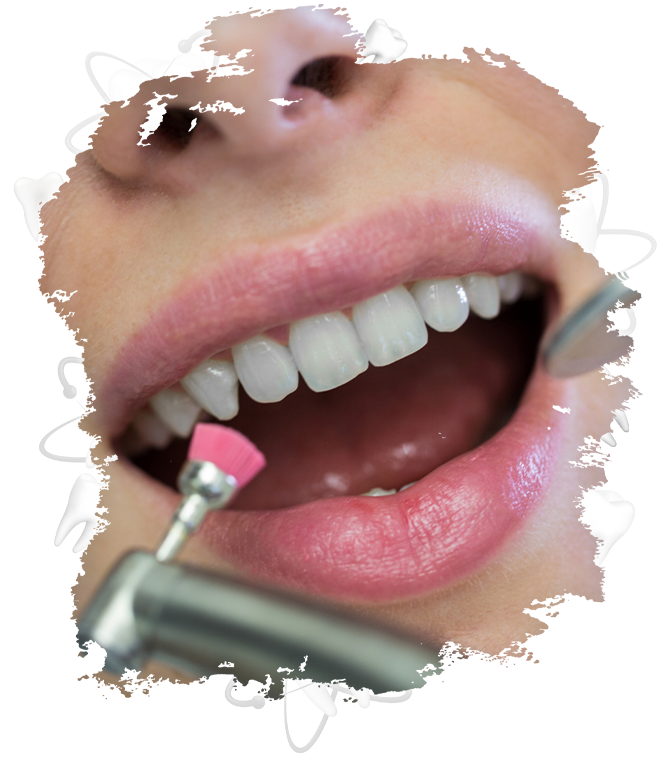
- A special rubber or brush tip is attached for polishing
- Special polishing paste suitable for porcelain restorations is applied (if needed)
- Polishing is done on all surfaces with circular, controlled pressure
- The procedure can be supported with a fluoride application
The entire procedure takes approximately 5–10 minutes and is completely painless.
The concept of “polishing toothpaste” used at home does not replace this professional application.
Who is Tooth Polishing Suitable For?
It is often preferred in the following cases:
- After regular cleanings for protection
- For those with tea, coffee, or tobacco stains
- On sensitive surfaces following teeth whitening
- Patients who have completed orthodontic treatment
- As part of the maintenance protocol after aesthetic restorations
- For patients undergoing periodontal care
Additionally, it is an excellent complementary care option for individuals with high aesthetic awareness and who prioritize oral hygiene.
When and How Often Is It Done?
Polishing is applied after professional cleaning. It is generally recommended every 6 months, but in some patients, such as those with:
- High tea or coffee consumption
- Smoking
- Increased plaque after orthodontic treatment
- Sensitive enamel surface
the frequency may be reduced to every 3–4 months.
Can polishing be used at home?
There are products on the market sold as “polishing toothpaste,” but these are not alternatives to professional polishing procedures. Home products only help to:
- Reduce surface stains
- Provide a sense of freshness
Excessive use can cause enamel wear. Therefore, home polishing products should not be used frequently.
Polishing paste is an important clinical procedure applied after professional cleaning that provides both aesthetic and biological benefits, supports enamel protection, smooths the surface, and reduces plaque accumulation.
When applied regularly, it ensures a brighter smile, a cleaner mouth feeling, and healthy enamel structure. The foundation of dental care routines includes brushing + interdental cleaning + professional cleaning + polishing; this way, both aesthetic and periodontal health are maintained at an optimal level.