Occlusion Control: How Is It Done?
Occlusion is the way the upper and lower teeth come into contact during chewing and is one of the most critical functional parameters of the oral–jaw system. Healthy occlusion means balanced muscle activity, proper jaw closure, stable joint position (TMJ), and preservation of natural tooth wear. Malocclusion, on the other hand, can lead to numerous problems including jaw joint pain, migraine-like headaches, teeth grinding, fractures, restoration failure, and aesthetic disturbances.
Therefore, occlusion control is not merely “looking at how the teeth close”; it is a comprehensive clinical procedure that evaluates the jaw joint, muscles, function, chewing pattern, and biomechanics of the tooth surfaces.
Free Information Form
Get Detailed Information!
Why Is Occlusion Control Important?
Proper occlusion:
- Protects teeth from excessive load
- Ensures balanced function of jaw muscles
- Protects the temporomandibular joint
- Extends the lifespan of restorations such as fillings, crowns, and implants
- Improves chewing function
- Provides stable results in aesthetic smile design
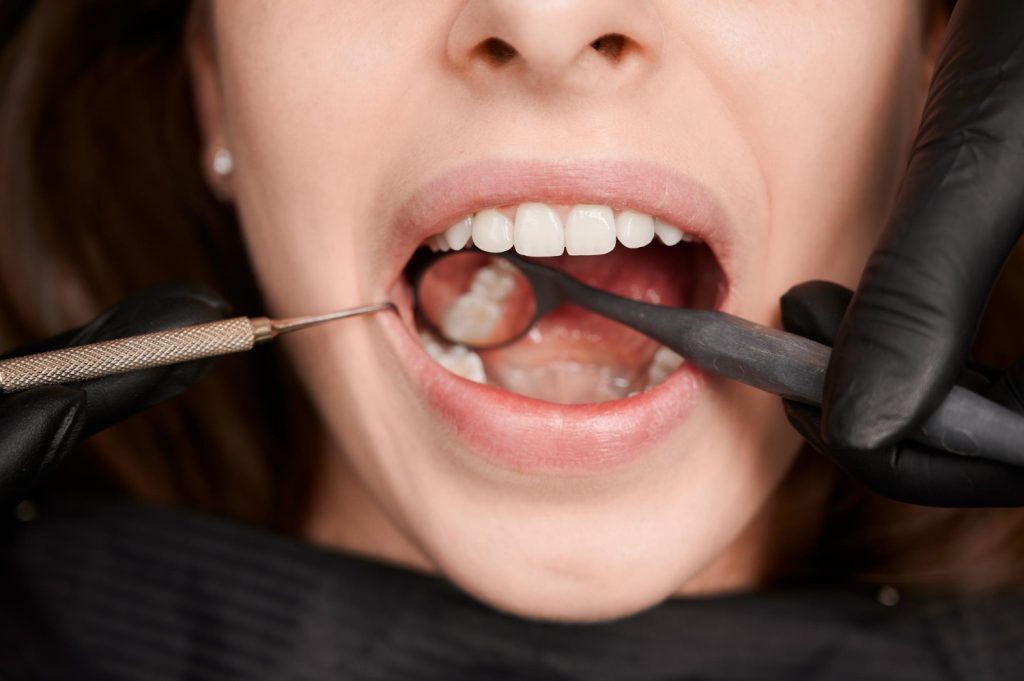
Malocclusion, by creating “microtrauma,” wears down tooth enamel over the years, can lead to the fracture of fillings and crowns, gum recession, and even temporomandibular joint locking.
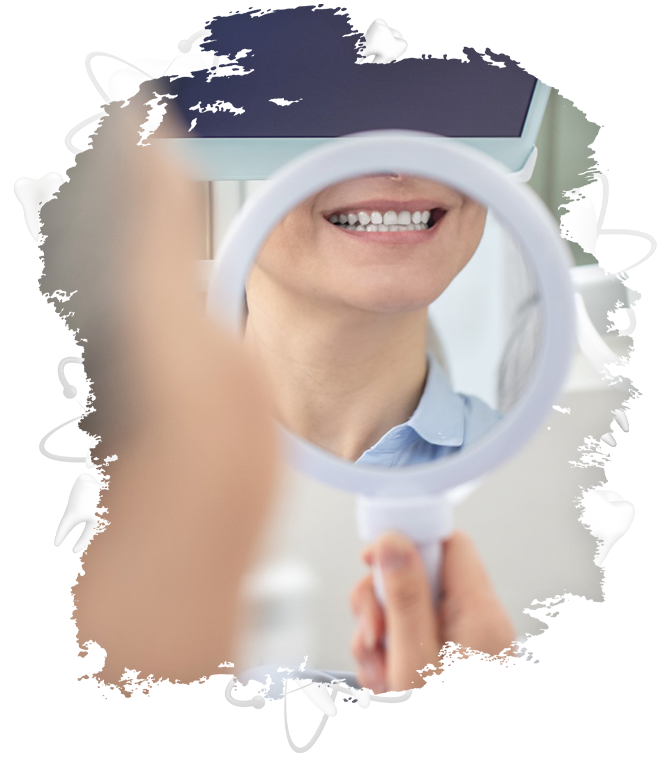
How Is Occlusion Checked?
During occlusion control, the jaw closure is first evaluated; at this stage, static and dynamic closure analysis is performed, and the harmony between centric relation (CR) and maximum intercuspation (MIP) is compared.
Then, using articulation paper, the contact points are examined; areas with high contact, premature contacts, and pressure zones during lateral movements are identified.
Muscle palpation is also an important step; the masseter, temporal, and neck muscles are manually examined for tenderness, muscle tension, and signs of functional disorders. Similarly, the temporomandibular joint (TMJ) is evaluated; joint movements are checked for sounds, clicks, deviation (jaw shift), and pain.
After this, the dental arch form and tooth positions are analyzed in detail. Functional guidance elements such as the anterior guide, posterior guide, and canine guidance are observed to ensure they are functioning correctly. The patient’s chewing pattern is examined, and signs of tooth clenching or grinding (bruxism) are evaluated.
Nowadays, when necessary, digital occlusion analysis systems (e.g., T-Scan) are used to objectively measure contact duration, contact intensity, and load distribution during chewing. This comprehensive evaluation reveals not only the current occlusion position but also the patient’s functional risk profile.
Evaluation of Static and Dynamic Occlusion
In static occlusion, when the teeth are clenched, all teeth are expected to be in balanced contact.
In dynamic occlusion, lateral movements, forward sliding (protrusive), and posterior contacts are observed.
The anterior teeth play a guiding role, while the canine guide is the natural biomechanics that protects the temporomandibular joint. In case of dysfunction, even brief contacts can excessively wear the teeth.
Occlusion Problem Symptoms
Common symptoms observed in individuals with occlusion problems:
- Morning pain in jaw and facial muscles
- Headache / migraine-like pains
- Tooth sensitivity and cracks
- Irregular wear on tooth surfaces (attrition–erosion)
- Clicking/popping sounds from the jaw joint
- Discomfort or shifting sensation while chewing
Early diagnosis is critical for restoration stability and joint health.
How Is the Treatment Approach Planned?
Treatment varies depending on the source of the problem:
- Night guard / splint
- Occlusal adjustment (height regulation)
- Orthodontic treatment
- Composite contour adjustments
- Muscle-relaxing physiotherapy and botulinum toxin applications
- Restorative & prosthetic planning
- Smile design guided by digital occlusion
The goal is to restore natural function and maintain the joint–muscle–tooth balance.
Occlusion control is the foundation of aesthetic and functional success in modern dentistry. It is a detailed examination that concerns not just a single tooth but the entire masticatory system.
With regular check-ups, accurate diagnosis, appropriate restoration planning, and a function-focused approach, teeth and the jaw joint remain healthy for many years. In aesthetic procedures such as smile design, implants, and veneers, occlusion must always be evaluated.