What is Stitchless (Flapless) Implant?
A stitchless implant is a minimally invasive implant technique in which the implant is placed into the bone through only small entry points, without making a large surgical incision in the gum tissue. While in traditional implant surgery the gum is lifted, the implant is placed, and sutures are used; in the stitchless implant method, the procedure is performed without flap elevation, and the implant site is prepared using laser or special punch systems.
This technique is especially applied in patients with sufficient bone volume and suitable anatomical structure, and it results in minimal bleeding, faster healing time, and lower pain levels. In addition, gum integrity is preserved, tissue trauma is reduced, and aesthetic healing progresses in a more controlled manner. With modern digital dentistry, the stitchless implant approach has now become a comfortable and safe standard in many clinics.
Free Information Form
Get Detailed Information!
How Is a Stitchless Implant Performed?
First, a 3D tomography (CBCT) scan is taken from the patient. The bone structure, sinus, and nerve pathways are examined.
Then, with digital measurements and computer-assisted planning, the angle and position of the implant are determined.
If necessary, a CAD/CAM surgical guide is prepared. During the procedure, the gum tissue is not widely incised; instead, a micro-entry is made.
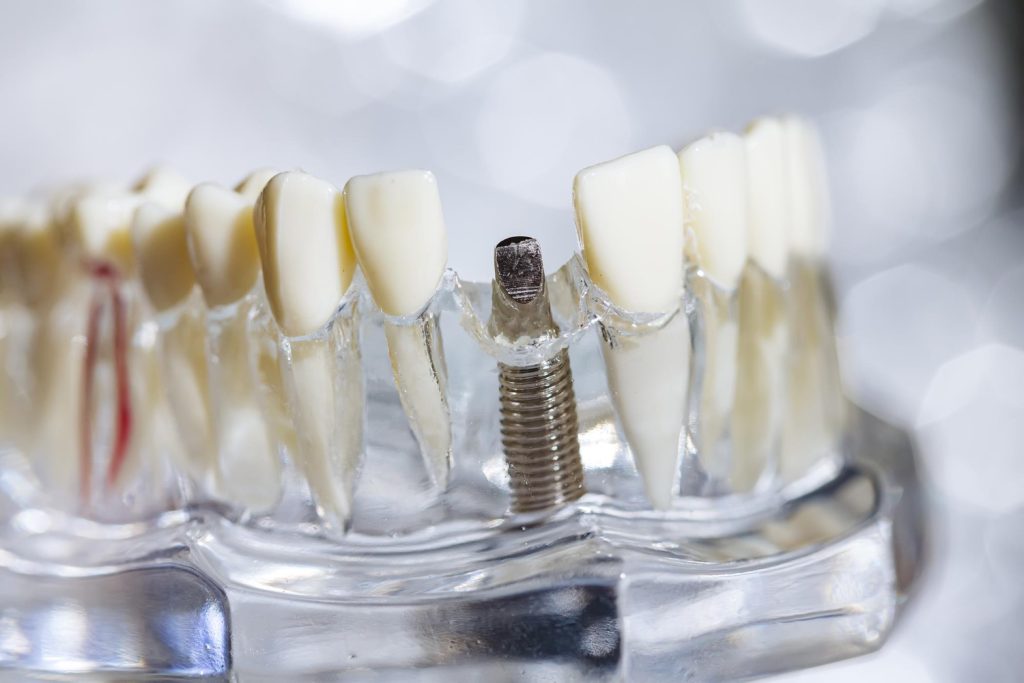
The implant socket is prepared, the implant is placed, and the gum closes without stitches. In most cases, local anesthesia is sufficient, and the operation time is shorter compared to the traditional method. Since minimal trauma is applied to the tissues, the healing process is faster; the patient can usually return to daily social life on the same day.
Advantages of Stitchless Implant
- Less pain and swelling
- Fast healing
- Minimal bleeding
- Aesthetic gum healing
- No stitches — reduced need for follow-up
- High post-surgical comfort
- Short procedure under local anesthesia
- In suitable cases, a temporary tooth can be placed on the same day
Since tissue integrity is largely preserved, there is also a biological healing advantage.
Possible Complications
As with any surgical procedure, implant and similar treatments also carry some risk of complications. However, with proper planning and an appropriate surgical technique, these risks are significantly reduced. Complications can usually be easily managed when detected early.
Possible situations:
- Temporary pain and swelling
- Development of infection
- Insufficient integration of the implant
- Gum sensitivity
Regular follow-ups help ensure early detection of these risks.
Which Patients Is It Suitable For?
This technique is preferred in patients with sufficient bone volume and appropriate bone density. If a tooth has been previously extracted and the area has healed, and the jawbone has adequate width, the stitchless method is ideal.
In the following cases, the decision requires individual planning:
- Advanced bone loss
- Sinus drop (sinus pneumatization)
- Periodontal tissue loss
- Anatomical limitations of the jawbone
In these cases, bone augmentation or a conventional implant protocol may be required first.
Contraindications and Risky Conditions
Like every modern method, there are situations where stitchless implants are not suitable. Advanced bone loss, uncontrolled systemic diseases, or the presence of an active infection can make this technique risky. In such patients, the underlying problems must be treated first. Otherwise, implant success may decrease and the risk of complications may increase.
Preoperative Preparation Process
The preparation process before implant or surgical procedures is one of the most critical stages of treatment. At this stage, the patient’s overall health condition, medications used, and intraoral structures are evaluated in detail. The aim is to minimize risks during and after the operation.
During the preparation process, the following are usually performed:
- Radiological imaging (panoramic X-ray / CBCT)
- Evaluation of blood parameters (if necessary)
- Control of intraoral infections
When this stage is properly planned, both surgical success increases and the healing process progresses more smoothly.
Operation Duration and Patient Comfort
Stitchless implant procedures are generally completed in a short time. Since it is performed under local anesthesia, the patient does not feel pain during the procedure. The short surgical process also reduces the patient’s stress level.
Factors that increase comfort:
- Short operation time
- Minimal tissue intervention
- Less surgical trauma
- Fast completion of the procedure
Stitchless Implant Process and Healing
After the operation, most patients experience minimal swelling and bruising. Chewing and speaking comfort returns quickly. In general, the need for antibiotics is lower and they are used only in cases determined by the physician. Oral hygiene instructions and a soft diet are recommended.
The biological integration of the implant with the bone (osseointegration) usually takes an average of 6–12 weeks, as in all methods. In some cases, this period may be shorter, and early loading protocols may be applied.
When performed with proper patient selection and digital planning, the stitchless implant is an advanced surgical method that makes implant treatment more comfortable, faster-healing, and minimally traumatic.
In patients with sufficient bone structure, it provides both aesthetic and functional advantages, while reducing pain, swelling, and postoperative care requirements. Modern implantology now prioritizes approaches that preserve tissues and interfere as little as possible with natural anatomy; the stitchless implant is one of the most successful examples of this philosophy.
Effect of Smoking
Smoking is one of the most important factors that negatively affects the success of implant treatment. By reducing blood circulation, it can slow down the healing process and make bone integration more difficult. For this reason, patients are generally advised to reduce or quit smoking during the treatment process.
First Days After Implant Surgery
The first days after the operation are the most sensitive period of healing. During this phase, mild swelling, sensitivity, or minimal pain may occur. However, these complaints usually decrease in a short time. Most patients can return to their daily life within a few days.
During this period:
- The area should be protected
- Hard foods should be avoided
- Oral hygiene should be carefully maintained
Results in Terms of Dental Aesthetics
Implant and similar treatments are evaluated not only in terms of function but also aesthetic outcomes. A properly planned treatment can provide an appearance closest to a natural tooth. Especially in anterior (front) areas, gum harmony and tooth form are of great importance.
Factors affecting aesthetic success:
- Gum symmetry
- Color matching
- Natural tooth shape
- Balance of the smile line
A successful aesthetic result directly improves facial expression and increases self-confidence.