Which Dental Problems Can Sensitivity to Cold and Heat Indicate?
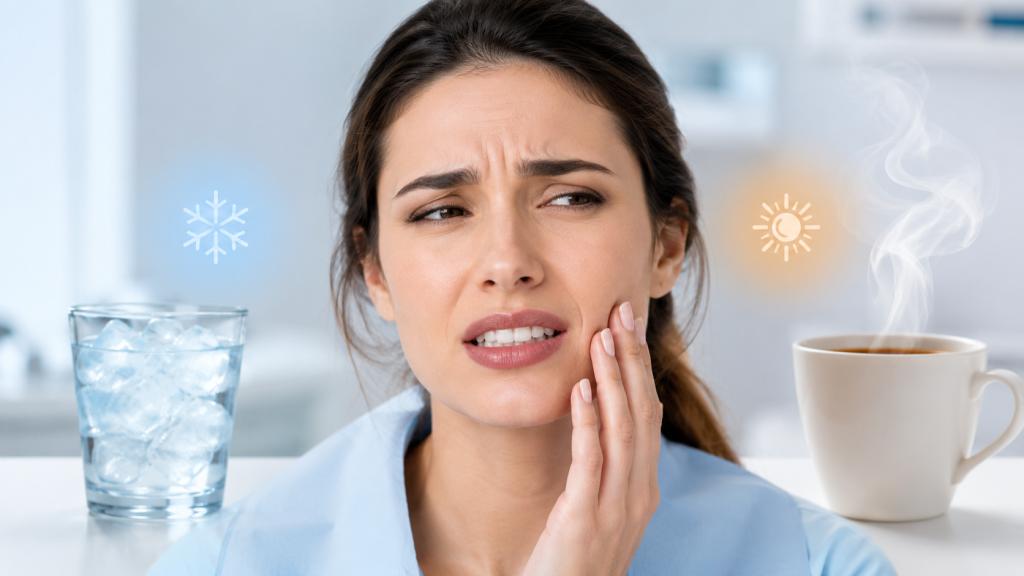
A sudden sharp pain in the teeth while drinking cold water, sipping hot tea, or consuming sweet foods is a common problem experienced by many people. This condition may often be short-lived and temporary; however, in some cases, tooth sensitivity may be a sign of an underlying dental or gum problem.
In particular, if sensitivity to cold and heat occurs frequently, gradually becomes more severe, or is concentrated in a single tooth, it should be evaluated by a dentist.
Free Information Form
Get Detailed Information!
What Is Sensitivity to Cold and Heat in Teeth?
Tooth sensitivity is a condition in which the teeth react more strongly than normal to stimuli such as cold, heat, sweet or sour foods, or contact with air. This reaction is usually felt as a sudden, sharp, and short-lasting pain.
When the enamel layer that protects the outer surface of the tooth or the gum tissue is damaged, the more sensitive inner layer of the tooth, known as dentin, may become exposed.
The tiny tubules in the dentin layer transmit external stimuli to the tooth nerves, causing the sensation of sensitivity.
Which Problems Can Cold and Heat Tooth Sensitivity Indicate?
A sudden sharp pain in the teeth while drinking cold water, sipping hot tea, or consuming sweet foods is a common problem experienced by many people. This condition may often be short-lived and temporary; however, in some cases, tooth sensitivity may be a sign of an underlying dental or gum problem.
In particular, if sensitivity occurs frequently, gradually becomes more severe, or is concentrated in a single tooth, it should be evaluated by a dentist.
Underlying Main Causes of Cold and Heat Sensitivity
Tooth sensitivity may indicate different problems depending on its type. Below are the main dental issues that can lead to this sensitivity:
1. Enamel Wear
Brushing the teeth too hard, using abrasive toothpastes, frequently consuming acidic drinks, and teeth grinding can cause wear on the enamel surface. When the enamel layer becomes weakened, the underlying dentin is left unprotected. This can create a sudden and sharp pain, especially in response to cold foods.
2. Early and Advanced Tooth Decay
Tooth decay does not always cause pain in its early stages. However, as decay begins to progress, sensitivity may develop in the tooth:
- Early Tooth Decay: It usually causes sensitivity with cold foods and drinks.
- Deep Tooth Decay: When the decay approaches the nerve, sensitivity may begin especially against hot foods, and the condition can become more serious.
3. Gum Recession
When the gums recede due to improper brushing technique, gum disease, or genetic predisposition, the tooth roots become exposed. Since the roots are not protected by enamel, they are extremely sensitive to physical stimuli such as heat, cold, and touch.
4. Tooth Nerve Inflammation
Fillings that do not fully fit the tooth or the development of new decay underneath a previous filling may lead to sensitivity. Especially in deep fillings, the onset of heat sensitivity may indicate that the tooth nerve has gradually become affected.
5. Damaged Old or Deep Fillings
Previously placed fillings that do not fully fit the tooth, or the development of new decay underneath them, may lead to sensitivity. The onset of heat sensitivity, especially in teeth with deep fillings, may indicate that the tooth nerve has gradually become affected.
When Should Tooth Sensitivity Be Taken Seriously?
Tooth sensitivity does not always indicate an emergency. However, if certain symptoms are present, it is important to consult a dentist without delay.
Sensitivity should not be ignored in the following cases:
- If the sensitivity is concentrated in a single tooth
- If the pain continues for a long time after contact with hot or cold stimuli
- If there is night pain or throbbing
- If there is a visible fracture, crack, or cavity in the tooth
- If sensitivity has started in a tooth that previously had a filling
- If it is accompanied by gum recession, bleeding, or swelling
These symptoms may indicate more than simple tooth sensitivity.
How Is Tooth Sensitivity Treated?
The treatment of tooth sensitivity varies depending on the underlying cause. Therefore, a detailed dental examination should first be performed. When necessary, X-ray images are used to evaluate the tooth root, the condition of existing fillings, and the depth of decay.
Desensitizing Toothpastes
In cases of enamel wear or mild dentin sensitivity, desensitizing toothpastes may be recommended. When used regularly, these products may help reduce the effect of sensitive tubules on the tooth surface.
Fluoride Applications
Fluoride treatments applied by a dentist may help strengthen tooth enamel and reduce sensitivity. They are especially considered a supportive treatment option in early-stage enamel weakness.
Gum Treatments
In cases of sensitivity caused by gum recession, gum health is evaluated first. Scaling, periodontal treatment, or gum surgery may be required in advanced cases.
Fillings or Restorative Treatments
In cases of sensitivity caused by decay, fractures, cracks, or old fillings, filling treatment may be performed. Old fillings can be renewed to help protect the tooth against external stimuli.
Root Canal Treatment
In cases of sensitivity caused by decay, fractures, cracks, or old fillings, filling treatment may be performed. Old fillings can be renewed to help protect the tooth against external stimuli.
What Should Be Considered to Prevent Tooth Sensitivity?
Daily oral care habits play an important role in preventing tooth sensitivity. Factors such as improper brushing, acidic foods, and teeth grinding may damage the tooth surface over time.
To reduce tooth sensitivity, the following points should be considered:
- Teeth should be brushed gently with a soft-bristled toothbrush.
- Frequent consumption of acidic drinks should be avoided.
- If there is a teeth clenching or grinding problem, a night guard should be considered.
- Desensitizing toothpastes should be used with a dentist’s recommendation.
- Dental floss and interdental brushes should be used regularly.
- Dental check-ups every 6 months should not be neglected.
If there is a teeth clenching habit, awareness should be developed.